
The Beef Behind the Steak: Who Supplies Dublin’s Steakhouses
A good steak starts long before the grill. Here are the Irish farms and butchers behind Dublin’s best steakhouses, and why provenance is worth caring about.
Ask any chef and they’ll tell you the same thing: a great steak is mostly about the beef, not the cooking. Ireland has a natural head start here. A mild, wet climate grows grass almost year-round, so Irish cattle are largely grass-fed, giving beef that is leaner and more mineral than the heavily grain-finished meat common elsewhere. Dublin’s best steakhouses build on that with careful sourcing and dry-ageing. Here is where their beef actually comes from.
The butchers and suppliers behind the menus
A handful of names recur across the city’s best steak menus. F.X. Buckley has one of the strongest provenance stories in Dublin: a family butcher since the 1930s, its steakhouses are supplied by the family’s own butcher shops, which is exactly why locals so often name it for a reliably great steak. Brownes Steakhouse in Blanchardstown is built around a similar partnership with Doyle’s of Dublin family master butchers.
Two specialist Irish suppliers turn up again and again. John Stone, the long-established Longford dry-aged beef producer, appears on the menus at Ryleigh’s Rooftop and The Butcher Grill. Hannan’s Meats, the acclaimed producer behind Glenarm Shorthorn and Moyallon cuts, supplies the sharing cuts at FIRE Steakhouse & Bar. And Hawksmoor sources its beef from small community farms across the island of Ireland, in keeping with the group’s native-breed philosophy.
In-house butchery and dry-ageing
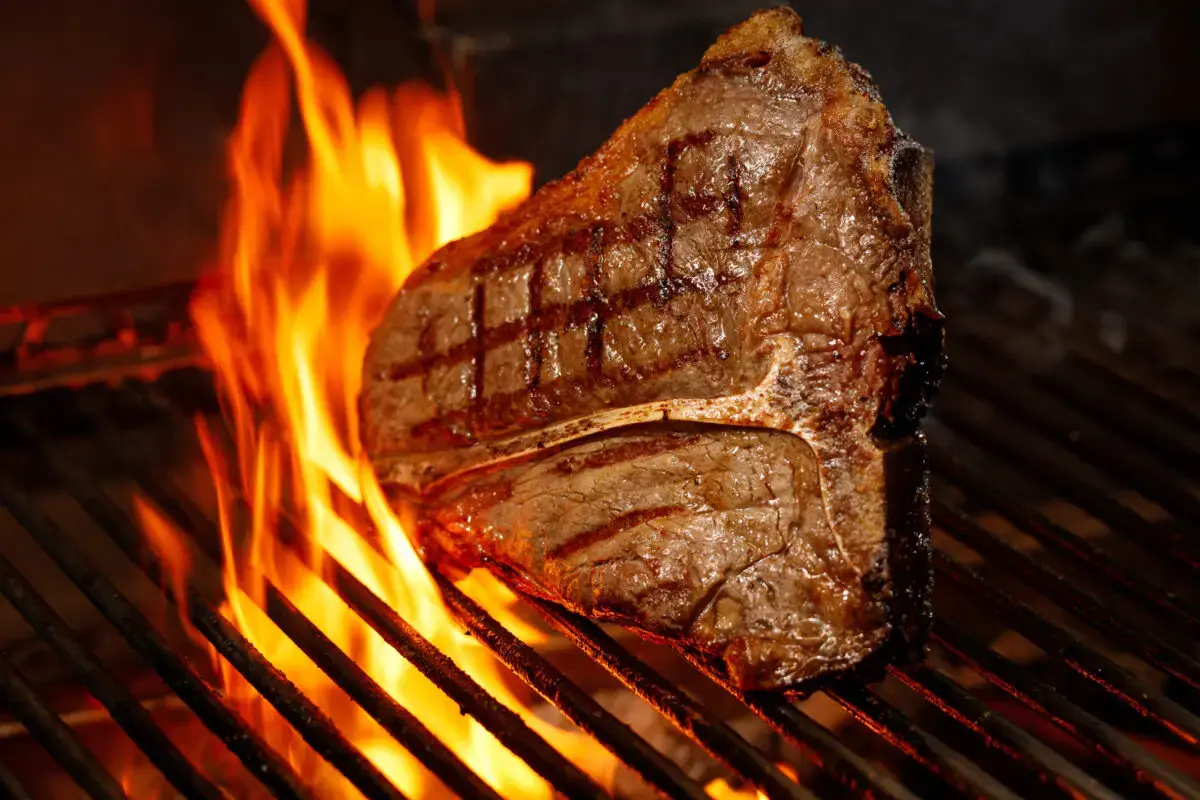
The most serious sign of a steakhouse that cares about its beef is doing the work itself. Brookwood on Baggot Street works with 100% Irish beef that it dry-ages and butchers in-house, and Darwin’s Tavern relaunched around a dedicated in-house dry-ageing room run by its own butcher. When a kitchen ages its own beef, it controls the flavour from carcass to plate rather than buying it in.
When the beef isn’t Irish
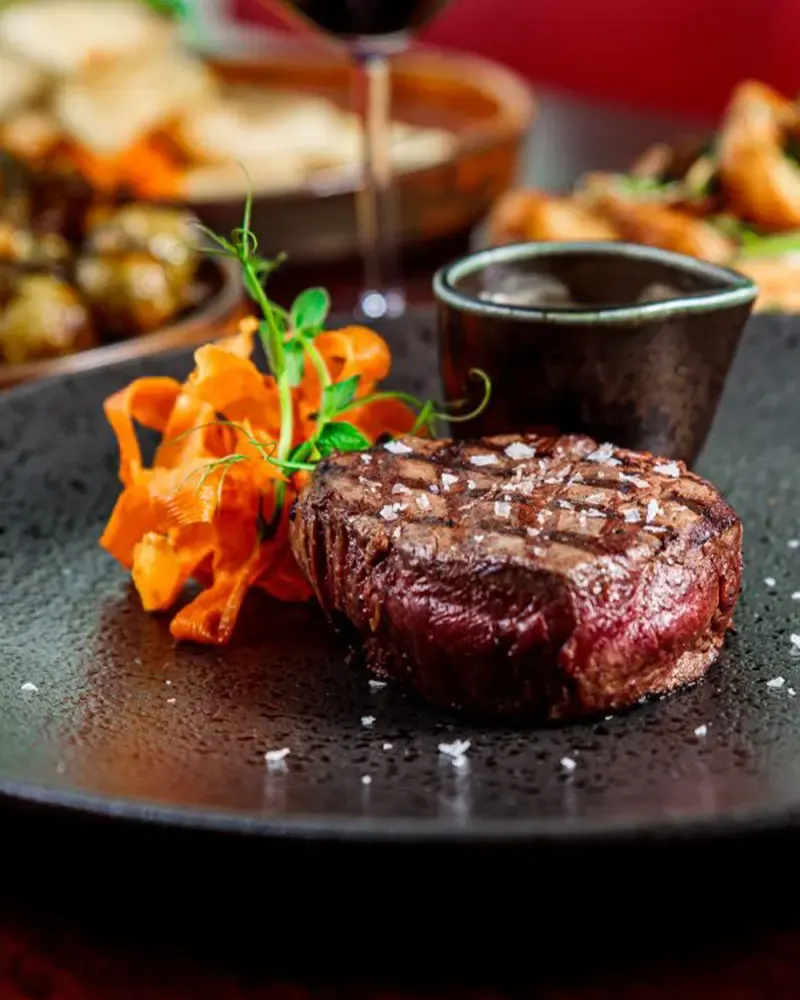
Not every cut on every menu is Irish, and that’s not a bad thing. Some steakhouses, The Butcher Grill among them, offer USDA grain-fed cuts such as Creekstone alongside their Irish beef, giving diners the choice between lean, grassy Irish flavour and the richer marbling of American grain-finished beef. The best menus are simply clear about which is which.
Steakhouses with a story worth reading on the menu
Irish beef and Dublin steak: quick answers
Most of Dublin’s best steakhouses use Irish grass-fed beef, often dry-aged. Some name their supplier, F.X. Buckley cut from their own family butchers, and John Stone and Hannan’s Meats appear on several menus, while a few dry-age and butcher in-house. A handful also offer imported cuts such as USDA beef alongside the Irish.
Dry-ageing hangs beef in a temperature- and humidity-controlled room for weeks so moisture evaporates and enzymes tenderise the meat, concentrating flavour into that deep, nutty steakhouse taste. Brookwood and Darwin’s Tavern run their own in-house ageing rooms; most others buy in dry-aged cuts from specialist suppliers.
It is different rather than strictly better. Ireland’s mild, wet climate grows grass most of the year, so Irish cattle are largely grass-fed, giving a leaner, more mineral, “beefy” flavour. Grain-finished beef (common in the US) is richer and more marbled. Dublin steakhouses lean grass-fed Irish, with a few offering grain-fed US cuts for contrast.
F.X. Buckley source from their own long-established family butcher shops, while Brookwood and Darwin’s Tavern dry-age and butcher on site. Buying from a dedicated butcher or ageing in-house is a good sign of a steakhouse that takes its beef seriously.
Browse the full directory of Dublin steakhouses, the ones locals rate in what Dublin locals say, or read why a steakhouse suits every occasion.