
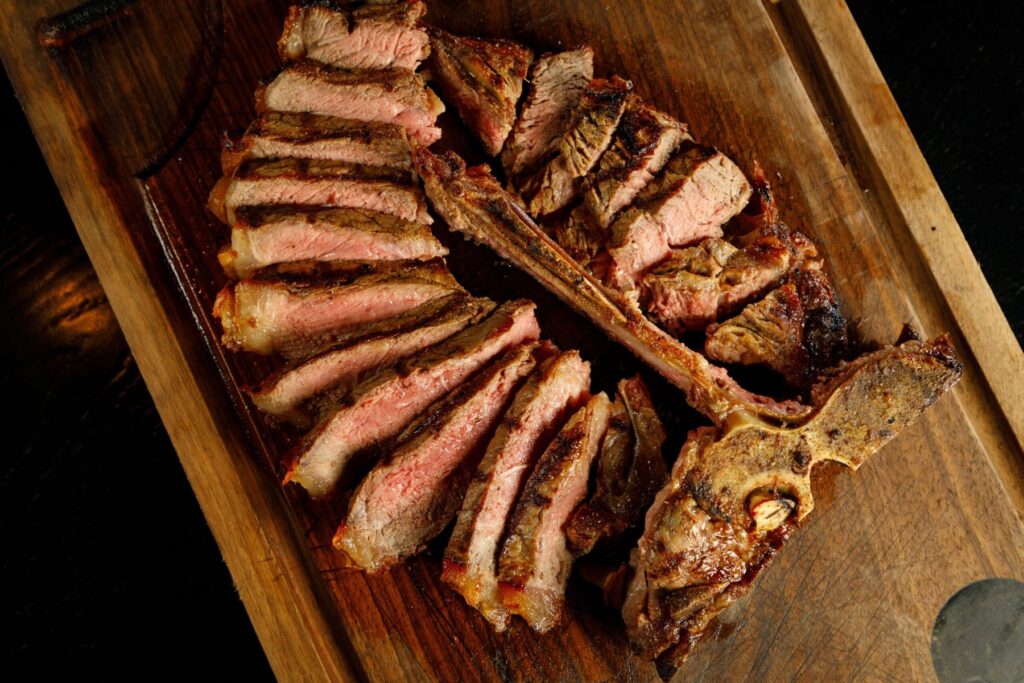
How to Cut and Eat Steak at a Steak Restaurant
How to cut each steak, which way the grain runs, what to eat first, how to order, and the table manners that actually matter.
You’ve waited 25 minutes, the steak lands, and it looks great. Then there’s the bone, a strip of fat down one side, and a line of gristle you didn’t expect. Every cut eats a little differently. Here’s how to get the best out of each one, how to order it in the first place, and the few table manners that really matter in a steakhouse.
TL;DR: To cut and eat steak at a restaurant, hold it still with your fork, tines down, and cut one bite at a time across the grain. Eat it while it’s hot and try the first piece before adding sauce or salt. Take bone-in steaks off the bone first, then slice. Lean cuts like fillet suit a rich sauce, and fatty cuts like ribeye want something sharp alongside.
How do you cut a steak properly at a restaurant?
Hold your fork in your left hand and your knife in your right, or the other way round if you’re left-handed. Press the fork into the steak, tines down, to keep it still. Then cut one bite-sized piece at a time, across the grain, using small back and forth strokes rather than pressing down hard. Keep your elbows in.
There’s no need to wait once it arrives. The kitchen has already rested your steak before it left the pass, so it’s ready to eat.
How to tell which way the grain runs
Look closely at the cut surface. You’ll see fine lines running in one direction, like the grain in a piece of wood. Those are the muscle fibres. Turn the plate so the lines run left to right in front of you, then cut straight down across them. On a sirloin the grain usually runs along the length of the steak. On a fillet it runs up and down through the round, so you can cut it like a cake. If you can’t see it at all, cut a small piece both ways and see which one chews more easily.
American or continental: does it matter how you hold your fork?
No. There are two common styles and both are fine. In the continental style, which most people in Ireland and Britain use, you keep the knife in your right hand and the fork in your left the whole time, tines down, and eat straight from the fork. In the American style, sometimes called the zig-zag, you cut a piece, put the knife down, switch the fork to your right hand and eat. Nobody in a Dublin steakhouse is watching your cutlery.
Is it rude to cut your whole steak up at once?
Not rude exactly, but it’s seen as poor form at a steakhouse, and it makes the meal worse. Pre-cut pieces cool down fast and lose their juices onto the plate. The one exception is fat or gristle you want to trim off. It’s fine to take that off in one go at the start and leave it to the side.
How to cut and eat each steak
Each cut has its own trick. The table runs from easiest to trickiest, so if you’re new to steak, start with a cut marked Easy. The notes below go into each one. If you’re not sure what a cut is, our guide to steak cuts explains where they come from and how they taste.
| Difficulty | Cut | How to cut it | Watch out for |
|---|---|---|---|
| Easy | Fillet | Bite-sized pieces from the edge in, like a cake | Very little fat, so it suits a sauce |
| Easy | Chateaubriand | Already sliced; take a few slices at a time | Leaving the rest to go cold on the board |
| Easy | Sirloin | Across the short side | The strip of fat along one edge |
| Moderate | Ribeye | Separate the cap along the fat line, then slice both parts | The pocket of fat in the middle |
| Moderate | Featherblade | Either side of the central line | The line of connective tissue |
| Moderate | Tomahawk | Off the bone in one piece, then strips across the grain | Usually carved for you |
| Tricky | T-bone and porterhouse | Off the bone first, then each side separately | The fillet side cools faster |
| Tricky | Côte de boeuf | Carved like a tomahawk | Edge slices are more cooked than the centre |
Fillet
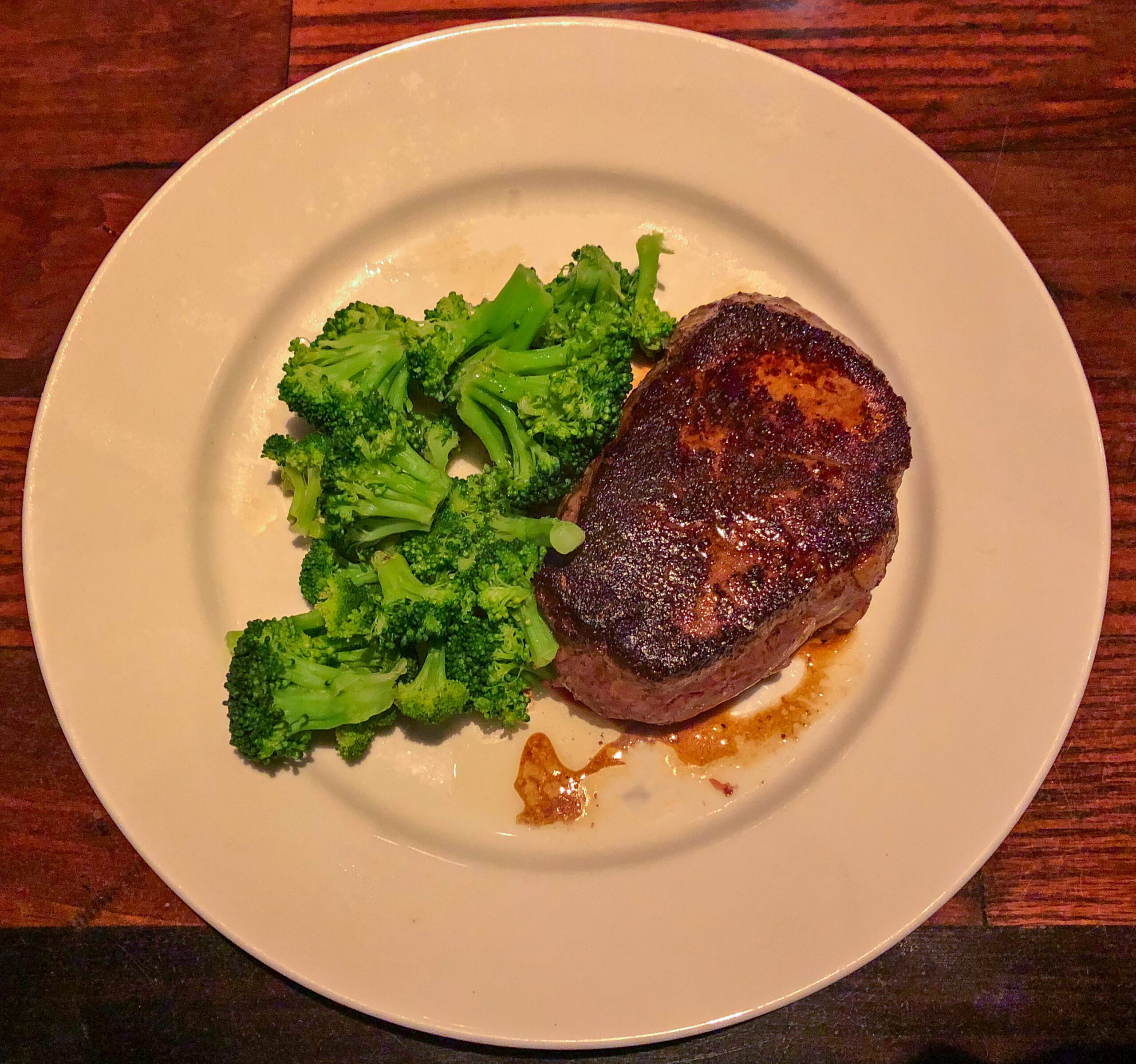
Fillet is the easy one. It’s lean, tender and usually served as a thick round, so cut it into bite-sized pieces from the edge inwards, one at a time. Because there’s so little fat, the first bite is best on its own and the rest suits a rich sauce. Béarnaise is the classic for a reason.
Ribeye
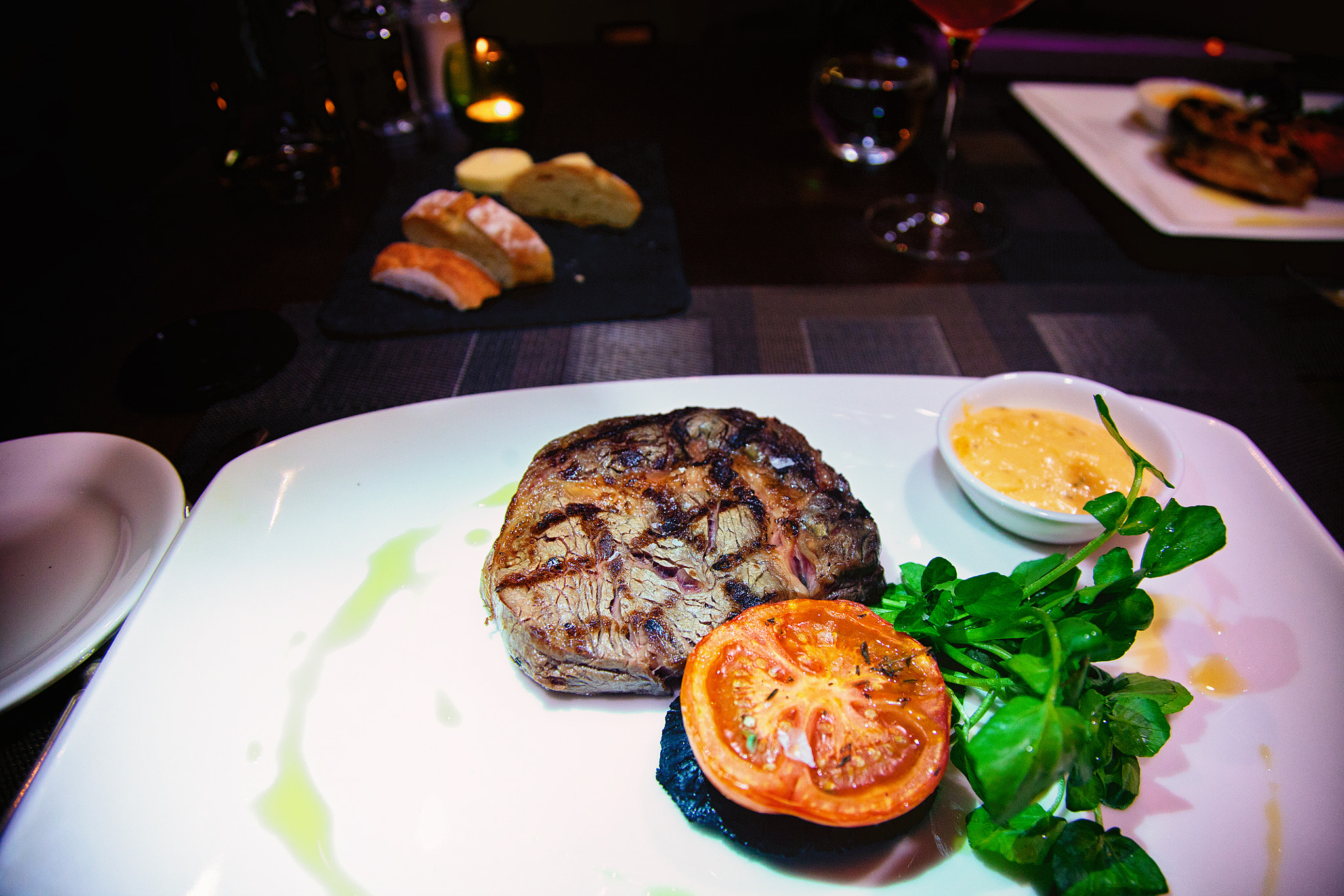
A ribeye has three parts. There’s the main eye in the centre, a curved strip of meat around the outside called the cap, and a pocket of fat between them. The cap is the bit chefs fight over: it’s the most tender and flavourful part of the steak. Cut along the fat line to separate the cap, then eat both parts in slices across the grain. You don’t need much sauce here. The fat does that job.
Sirloin (striploin)
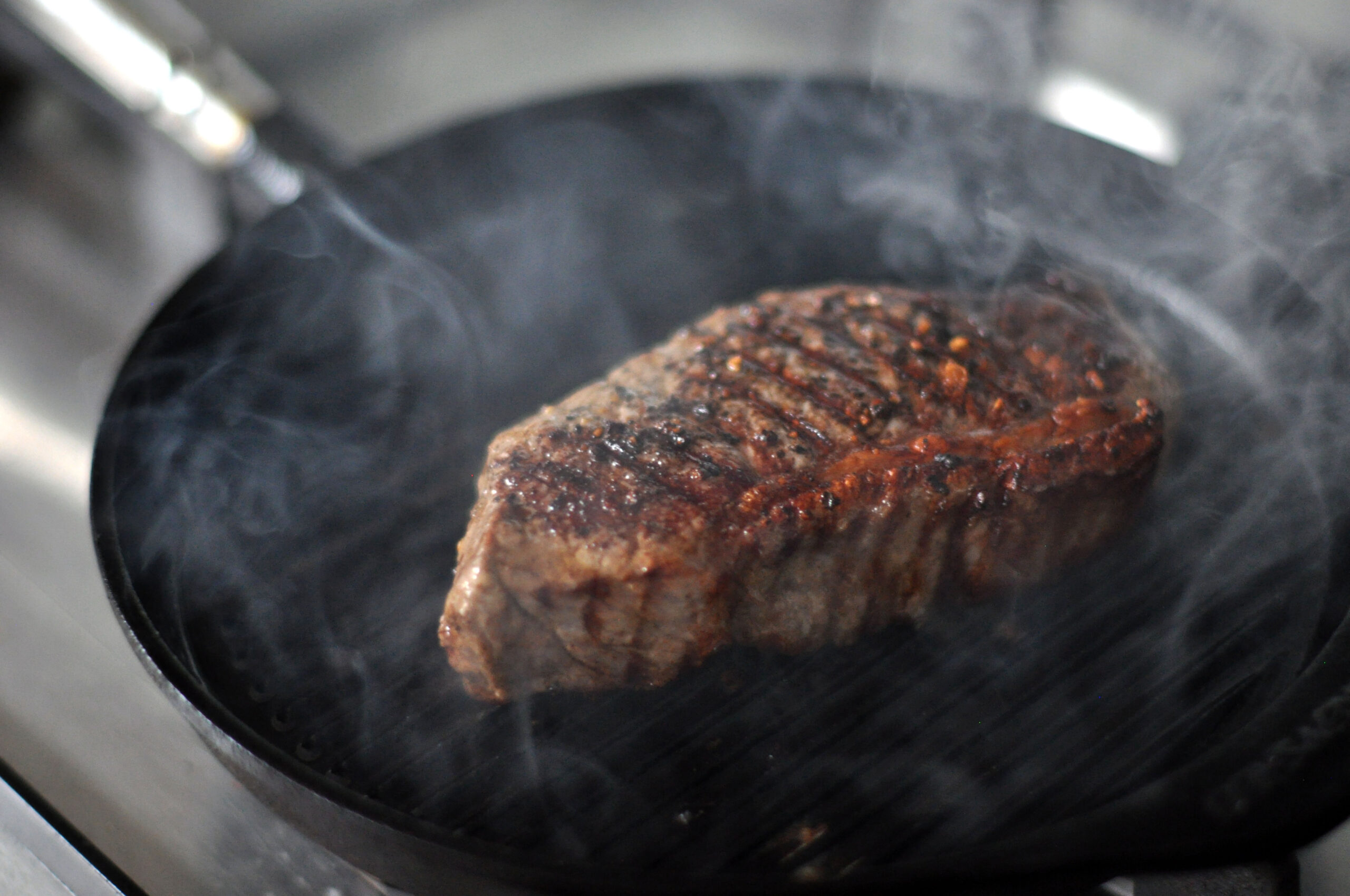
Sirloin comes with a strip of fat along one edge. If it’s crisp and well rendered, it’s worth eating a little with each bite. If you’d rather not, trim it off in one go at the start. The grain runs along the length of the steak, so cut across the shorter side. Peppercorn sauce suits sirloin’s firmer, beefier bite.
Featherblade and flat iron
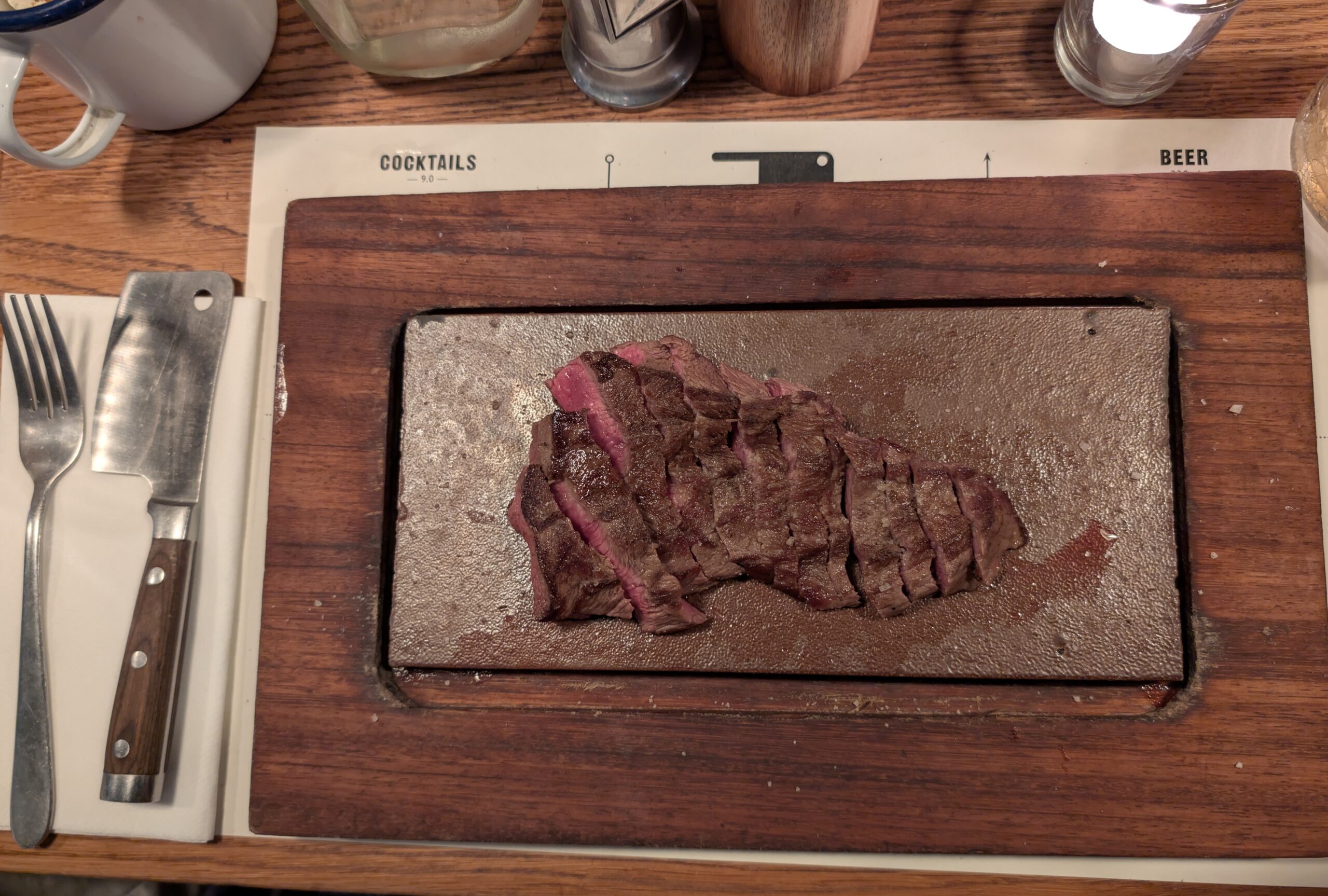
Featherblade comes from the shoulder and often has a thin line of connective tissue running down the middle. When it’s served as flat iron, that line has been trimmed out. If it’s still there, cut along either side of it and leave it on the plate. It won’t break down on the grill. If the featherblade has been slow-braised, you’ll barely need the knife at all.
T-bone and porterhouse
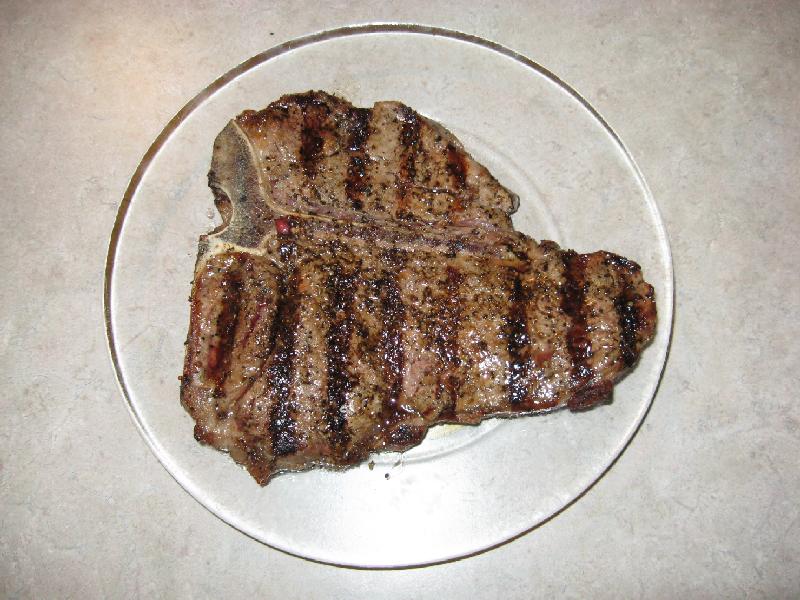
These are two steaks on one bone: sirloin on one side and a piece of fillet on the other. Cut each side off the bone first, close to the bone, then slice them separately. The fillet side is smaller and loses heat faster, so many people eat that first. Is a T-bone tender? The fillet side is very tender and the sirloin side has more bite, which is the whole appeal. As for picking up the bone, read the room. In a relaxed spot, nobody will mind. In a smarter dining room, get what you can with the knife and leave the rest.
Tomahawk
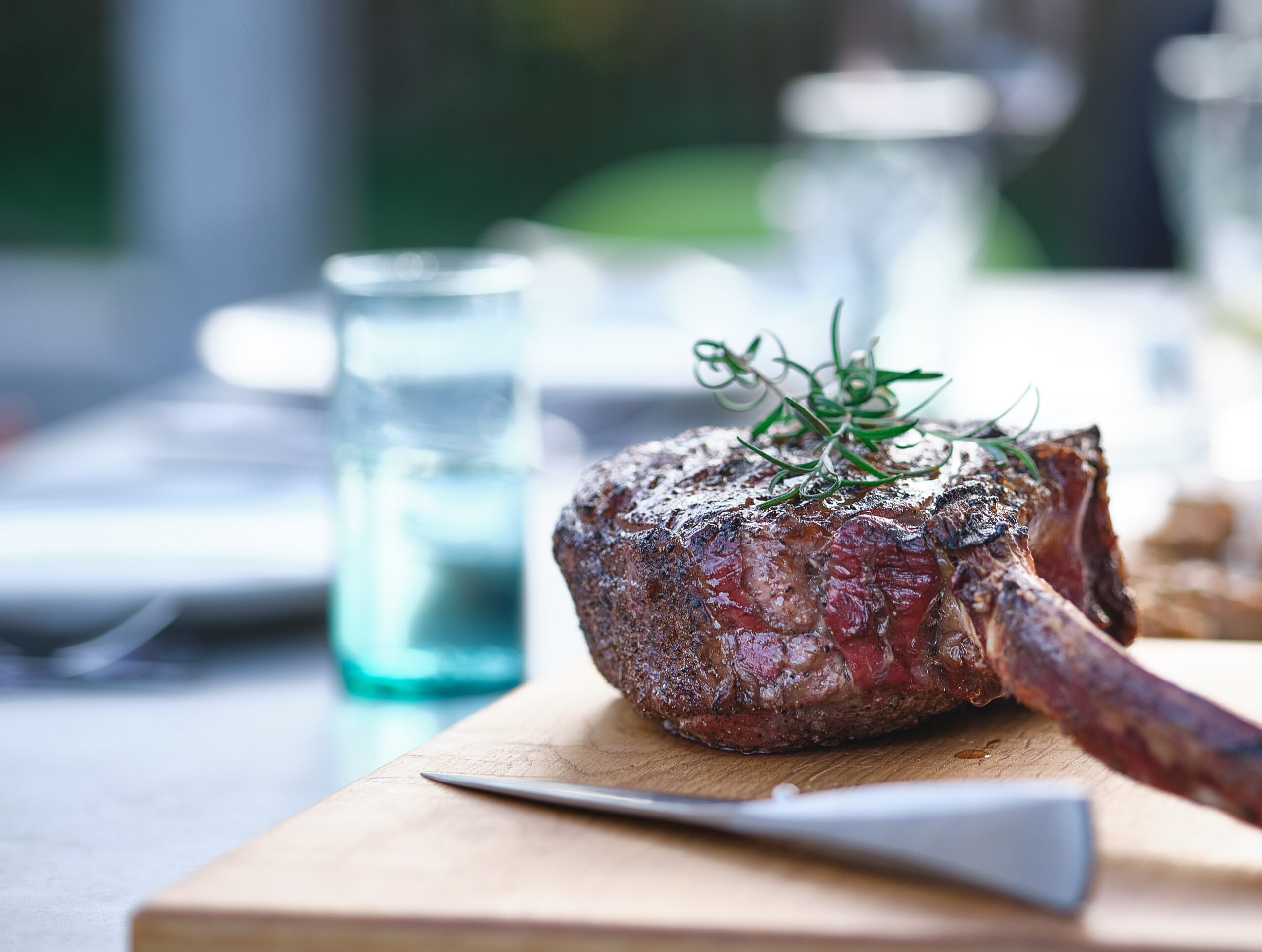
A tomahawk is a ribeye with the long rib bone left on, and it’s built for sharing. Most steakhouses carve it for you, either in the kitchen or at the table, and serve it sliced on a board. If it arrives whole, slice the meat off the bone in one piece, then cut it into strips across the grain for everyone. The bone is mostly there for show. See where to order one in our tomahawk steak guide.
Chateaubriand
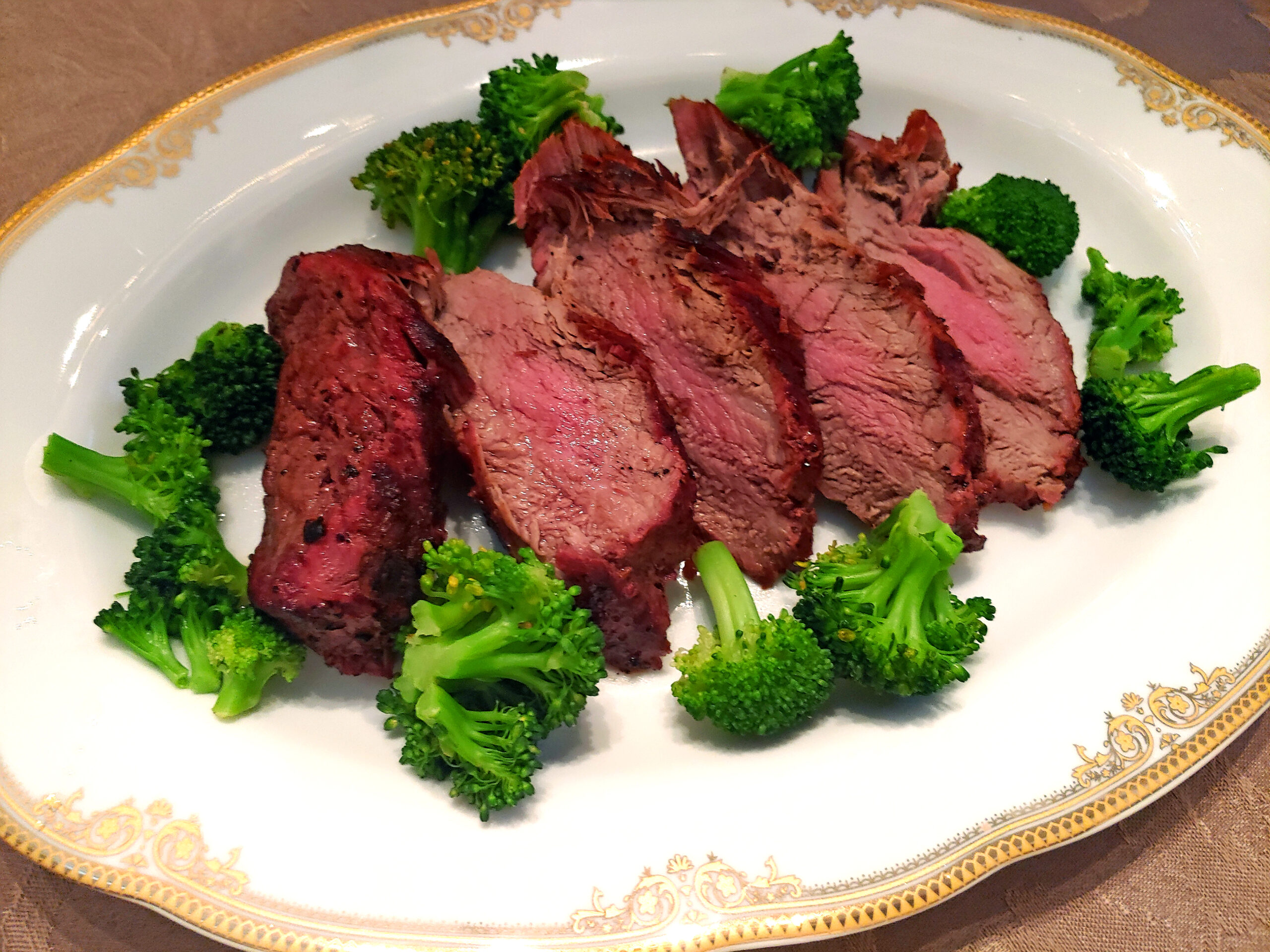
Chateaubriand is the thick centre of the fillet, cooked whole for two and sliced before it reaches you. Take a few slices at a time rather than loading your plate, so the rest stays warm on the board. Béarnaise is the traditional partner. Our chateaubriand page lists who serves it in Dublin.
Côte de boeuf
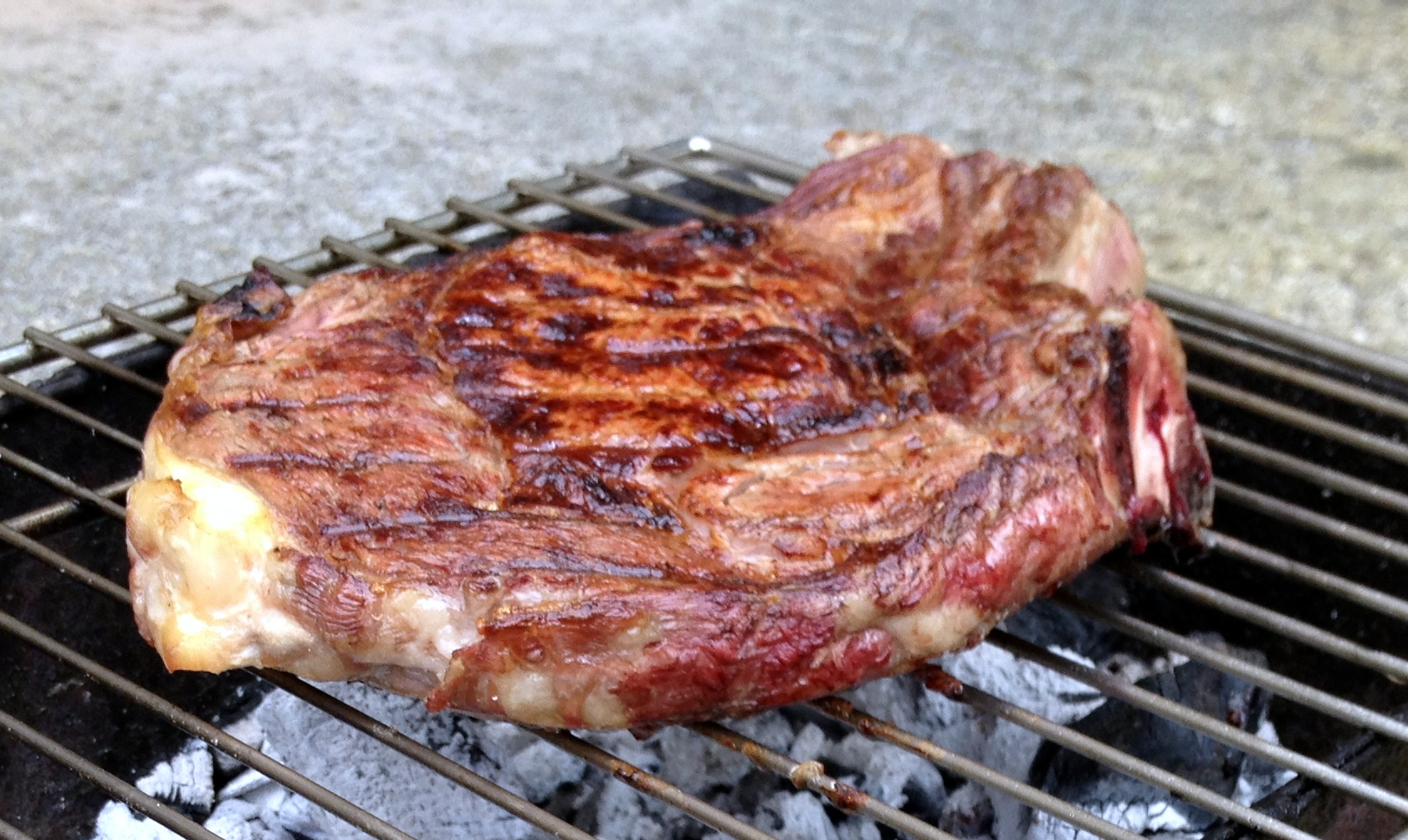
A côte de boeuf is a thick bone-in rib, usually for two. It’s carved like a tomahawk, but here’s a tip: the slices from the outside edge are more cooked than the ones from the middle. If one of you likes it pinker, share the centre and edge pieces out accordingly.
Should you eat the fat on a steak?
That’s up to you, but don’t write it off. Well-rendered fat on a ribeye or sirloin is soft, crisp at the edges and full of flavour, and plenty of people think it’s the best part. Chewy, pale fat is a different story. If it hasn’t rendered, trim it off and leave it at the side of the plate. Nobody will think twice.
What should you eat first with a steak?
Start with a piece of steak on its own. The first bite is when it’s hottest and the crust is crispest, and tasting it plain tells you whether it needs salt or sauce at all. Get to the chips early too, because they go soft fast. Keep the sauce on the side and dip each piece, rather than pouring it over and turning the crust soggy. A forkful of greens or salad between rich mouthfuls keeps the last bite tasting as good as the first.
Which sauces and sides go with each cut?
Lean cuts need fat and richness, and fatty cuts need something sharp or fresh to cut through. That’s the whole logic. The classic steakhouse sides are chips, creamed spinach, onion rings, mash, mushrooms and a green salad, and most menus in Dublin have some version of each.
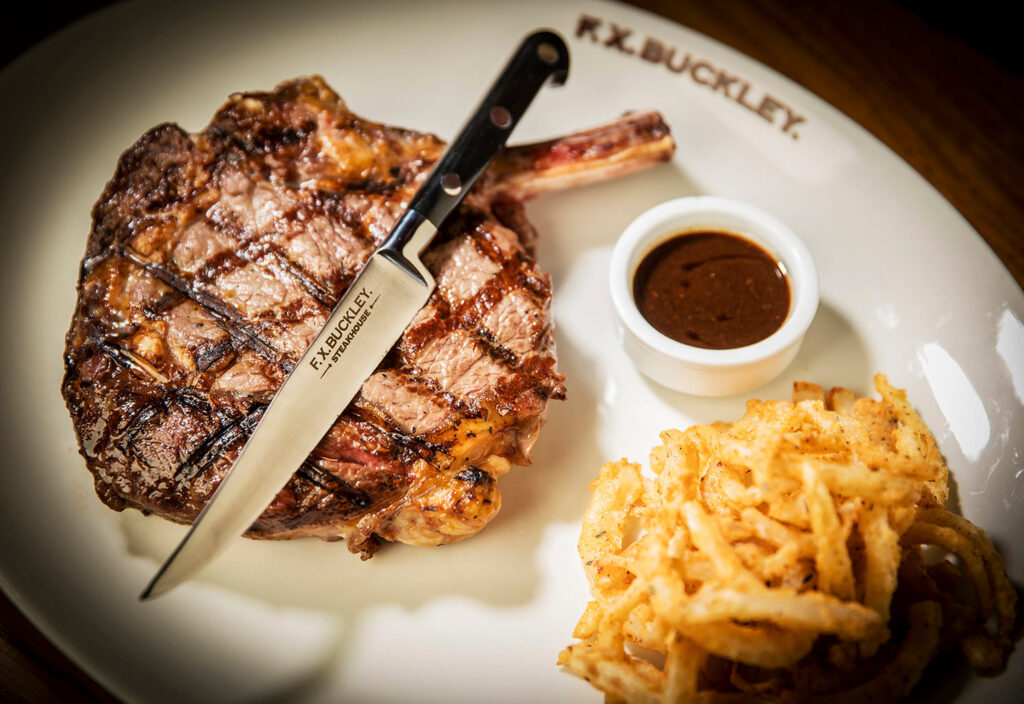
| Side or sauce | Works best with | Why |
|---|---|---|
| Béarnaise | Fillet, chateaubriand | Butter and egg add the richness lean meat doesn’t have; tarragon and vinegar keep it bright |
| Peppercorn | Sirloin, fillet | Creamy with a bit of heat, which lifts a beefy, firmer cut |
| Chimichurri or salsa verde | Ribeye, featherblade, tomahawk | Herbs and vinegar cut through fat |
| Bone marrow or garlic butter | Fillet, sirloin | More richness for leaner cuts |
| Chips or fries | Any steak | Salt and crunch against soft, juicy meat |
| Creamed spinach, greens or a sharp salad | Ribeye, côte de boeuf, tomahawk | Something green and slightly bitter freshens up a fatty steak |
| Onion rings or mash | Sirloin, T-bone | Comfort sides for a classic, no-fuss plate |
How do you order steak at a restaurant?
Tell your server four things: the cut, the size if there’s a choice, how you’d like it cooked, and the sauce. Then pick your sides. If you’re not sure which cut to go for, sirloin is a safe middle ground for a first visit. Choose fillet for the most tender steak and ribeye for the most flavour. Our most loved steaks in Dublin shows what other diners order.
Staff in a good steakhouse know their beef and will tell you which cuts are eating best that day, so ask. Thick and bone-in steaks can take 25 to 40 minutes, so order those early if you’re heading to a show.
Should you order steak medium or medium rare?
Medium rare suits most cuts. It’s what chefs usually recommend for fillet and sirloin, because it keeps them juicy. Ribeye can be better at medium, so the fat has time to melt through. Either way, order it the way you like it. That’s the whole point.
| Doneness | What the centre looks like |
|---|---|
| Rare | Cool to warm, deep red |
| Medium rare | Warm, red to pink |
| Medium | Pink all the way through |
| Medium well | Mostly brown, a little pink |
| Well done | Brown all the way through |
How do restaurants cook steak so well?
Better beef, more heat and more precision. Steakhouses buy better beef, often dry-aged for weeks to deepen the flavour. They cook on grills, charcoal ovens or broilers that run far hotter than a home hob, which gives a deep crust without overcooking the middle. They salt properly, use thermometers rather than guesswork, and rest every steak before it goes out. We go into more detail in why restaurant steak tastes better.
What is the 3-3-3 rule for steak?
It’s a rule of thumb for grilling at home, not something you’ll need in a restaurant. For a steak about an inch thick, you sear it for three minutes on one side over high heat, three minutes on the other, then move it to a cooler part of the grill for about three minutes more. Versions vary, and thicker cuts need longer, so a thermometer is still the more reliable test. In a steakhouse the chef does all of this for you. You just say how you’d like it.
What are bad table manners at a steakhouse?
The two most people notice are talking with your mouth full and leaving your phone on the table through dinner. After that, it’s pointing or waving your steak knife while you talk, sawing loudly at the plate, and reaching across people for sauces instead of asking for them to be passed. Wait until everyone has their food before you start, unless the others tell you to go ahead while it’s hot. Dublin steakhouses are relaxed, so none of this is about being posh. It’s just what makes the meal easier for the people around you.
When should you send a steak back?
Send it back, politely and early, if it isn’t cooked the way you asked, if it’s cold in the middle when it shouldn’t be, or if anything about the smell or texture seems off. Say so after the first cut rather than when half of it is gone. If you’re pregnant, safefood’s pregnancy advice is to fully cook food and serve it very hot, so ask for your steak well done and check with your GP or midwife if you’re unsure.
Frequently asked questions
Hold the steak still with your fork, tines down, and cut one bite-sized piece at a time across the grain with small strokes of the knife. Don’t cut it all up at the start.
It’s seen as poor form in a steakhouse, and it lets the steak go cold and lose its juices. Cut one piece at a time. Trimming off fat or gristle in one go is fine.
Look for the fine lines of muscle running across the meat, like the grain in wood. Turn the plate so they run left to right and cut straight down across them.
A home grilling rule of thumb: sear an inch-thick steak for three minutes per side over high heat, then about three minutes more over lower heat. Versions vary and thicker cuts need longer, so a thermometer is more reliable.
It depends on what you like. Fillet is the most tender, ribeye has the most flavour, and sirloin sits between the two. For a first visit, sirloin or ribeye are good all-rounders.
Medium rare suits most cuts, especially fillet and sirloin. Ribeye can be better at medium, so the fat has time to melt. Order it the way you enjoy it.
Up to you. Well-rendered fat on a sirloin or ribeye adds a lot of flavour. If it’s chewy or you don’t like it, trim it off and leave it on the side of the plate.
It depends on the restaurant. In a relaxed steakhouse it’s fine. In a smarter dining room, cut as close to the bone as you can and leave the rest.
Béarnaise is the classic, because fillet is lean and the sauce adds richness. Peppercorn and bone marrow butter also work well.
Talking with your mouth full and keeping your phone on the table through the meal are the two most people notice. Waving your knife while you talk comes a close third.
Still deciding where to go? Browse the Dublin steakhouse directory, check what to wear to a Dublin steakhouse, or find dry-aged steak near you.